The weakest link in your security may be the supplier you have not audited.
Cyber and privacy risk management across the supply chain, for companies whose exposure extends beyond their own perimeter.
Companies that already trust us
















How many hands touch your customer's order after the purchase.
A completed order generates a bundle of personal data that keeps circulating for days. Each handover is a new copy, in a system your team does not manage.
Under the LGPD, responsibility for the data remains with whoever collected it. Checkout anti-fraud does not reach any of these four hands.
Supplier-borne attacks doubled in one year.
Percentage of security breaches originating from third parties or suppliers.
Source: Cipher / x63 Unit, 2026.
More than 60% of data breaches involve a third-party supplier.
Suppliers without minimum security controls
Integrators, SaaS providers and service providers access critical systems without the business having any way to assess whether their controls are adequate for the risk they pose.
Personal data shared without adequate contracts
Data shared with suppliers without a DPA, without security clauses and without regular review. Regulatory exposure grows with every contract signed.
No visibility of third-party risk
Without a TPRM programme, every new supplier comes in as a black box. The incident usually appears first in the partner's environment and only later in your operation.
Supplier risk documented with evidence.
Visibility and control over the risk that comes from your suppliers.
A third-party risk management programme that assesses, classifies and monitors critical suppliers, integrating cyber security and data protection compliance.
Supplier inventory and classification
We map and classify suppliers by criticality, access level and type of data shared. This is the foundation of TPRM and sets where effort is prioritised.
Third-party security assessment
Technical questionnaires, evidence review and security posture assessment of critical suppliers, with scoring and an individual gap report.
Contracts and security clauses
Review and drafting of DPAs and technical annexes aligned with the LGPD, GDPR and sector requirements, ready for signature.
Continuous supplier monitoring
Periodic reviews with updated risk scoring, checks for public incidents and tracking of relevant operational changes.
Response to third-party incidents
A protocol for managing incidents where a supplier is the vector: containment, notification, impact analysis and regulatory communication as applicable.
Supply chain risk report
A consolidated executive report with a view of risk by supplier, trends and recommendations, for leadership, the board and external audits.
From inventory to contract.
From contract to monitoring.
The process is divided into strategic stages. Click each one to explore.
Identify suppliers
We map your business's critical processes and the suppliers involved, assessing potential cyber and compliance risks that could affect your organisation.
Define criticality
We classify suppliers by criticality, setting priorities and the depth of the analyses to be carried out.
Cyber & Privacy Supply Chain 360° Assessment
We carry out detailed analyses based on frameworks, best practice and data protection legislation. The more critical the supplier, the deeper the audit.
Action plan
We produce strategic and operational recommendations: emergency and medium/long-term actions, raising cyber security and data protection maturity.
Monitoring
We put in place a follow-up process with clear indicators: executive reports per supplier, identification of risks and corrective actions, and compliance progress metrics.
Continuous improvement
We revisit the process periodically, adjusting strategies and presenting risk and performance reports to your team and to suppliers.
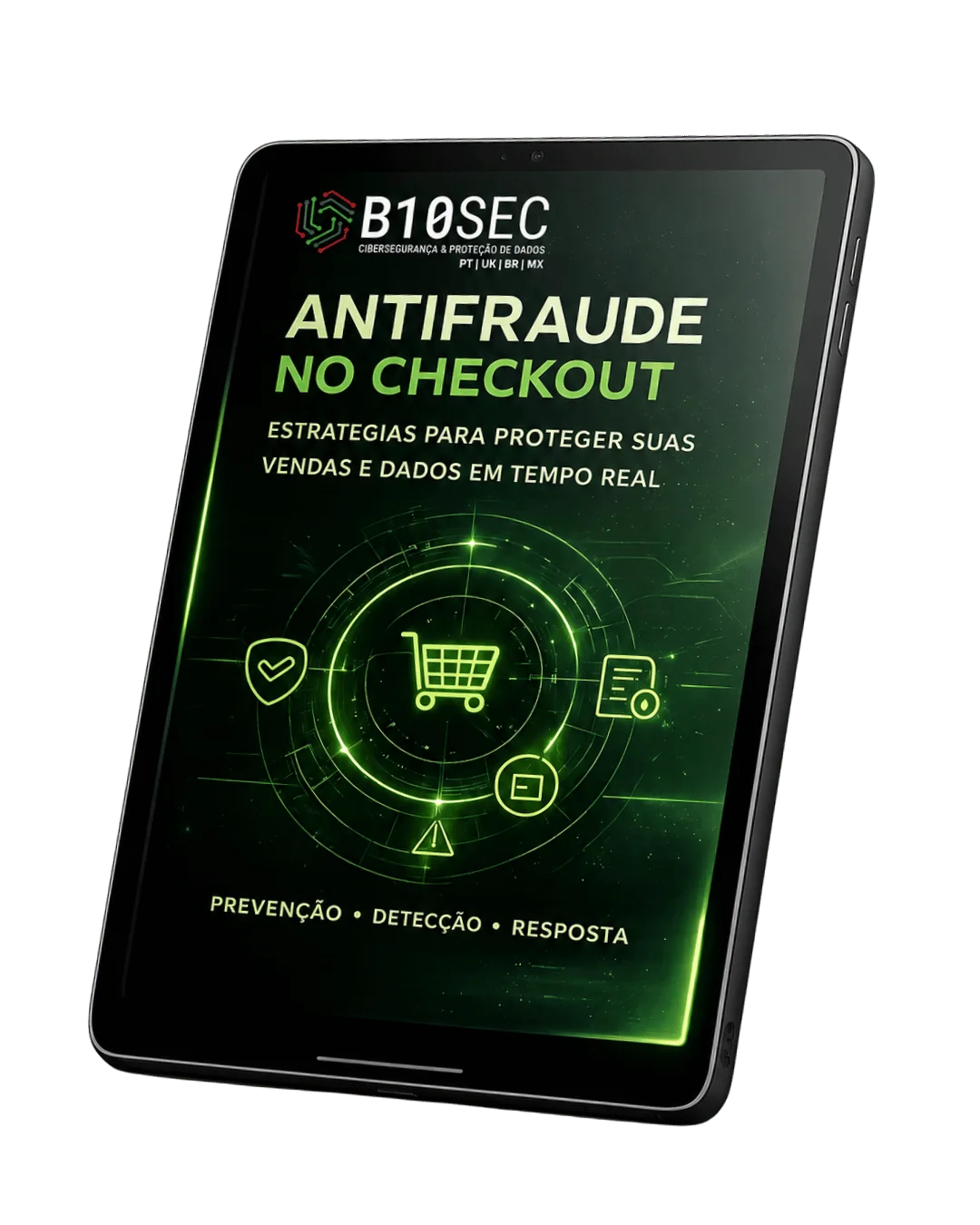
Checkout Anti-Fraud
Strategies to protect your sales and data in real time: prevention, detection and response to the risks that grow between checkout and delivery. Designed to circulate among the board on a single page.
What changes when there is a real programme.
Three ways of handling supplier risk, side by side, from inventory to the evidence the audit asks for.
 B10SEC
Scope defined by the number of suppliers and the criticality level of each one.
What sustains a third-party risk
programme over time.
Integrated technical and regulatory view
We assess suppliers on their cyber security posture and their data protection compliance, with a team that works on both fronts.
Scoring by supplier criticality
We prioritise effort where risk is highest: access to sensitive data, integration with critical systems and the number of exposed employees.
Defined review cycles
The programme runs on a cadence: scheduled review cycles, alerts on supplier changes and continuous updating of the risk register.
A deliverable ready for the external auditor
ISO 27001, SOC 2, NIS2 and the LGPD require evidence of TPRM. The programme produces this documentation in an organised way, available when the audit arrives.
Your perimeter extends to the last supplier in the chain.
Talk to a B10SEC specialist and find out how to structure a TPRM programme tailored to the number of suppliers, criticality level and regulatory requirements of your context.